There are 177 episodes of House, the 00s hospital drama starring Hugh Laurie as a brilliant but cantankerous doctor. What this means, to my dismay, is that I spent five entire days, five hours and 15 minutes of this autumn watching this series. In my defence, when I embarked on this rewatch, I was going through quite a trying time in my life. But I would find it difficult to excuse the fact that I didn’t just watch some House to take the edge off things, but attempted every single episode.
It’s a deranged television programme. It’s a tall order to select only a top 10 of the most bonkers plotlines – but here’s a representative handful. House kidnaps the star of his favourite medical soap opera because he has diagnosed him with a brain tumour just by watching him on TV. House pays an actor to pretend to die so that he can freak out his staff by bringing her “back to life” in the morgue. House performs surgery on his own leg in his bathtub to excise the tumours he got from taking medicine only approved for use on rats. A member of House’s team spends a whole episode trying to convince a suicidal patient that he deserves to live and is not a bad person, before it is revealed that the patient is a serial killer who has eaten at least 13 people.
And yet, despite these baffling scenarios, the episodes are all broadly the same in their structure: illness, diagnosis, misdiagnosis, brilliant and unlikely insight from House himself; cure; fin. I am so, so done with House.
And yet I cannot be done with House, because I haven’t actually finished watching it. At the time of writing, I have 10 episodes left of its final season. I am not enjoying it any more. But I cannot and will not stop. I have begun to think about it in the same terms as I am thinking about my remaining work commitments before Christmas. Just got to get that done, so I can relax and enjoy the holiday.
I have a problem, and this scenario with House is far from the first time it has reared its head. I can’t stop until a thing is done in its entirety. This, of course, does not apply to things I actually need to do. I mean leisure activities. I will force myself to read a 400-page book that I decided in the first hour of reading I did not like. The only book I have ever left unfinished is Catch-22, because I lost the copy 12 years ago, but, late at night at least once a month, I think about how I need to finish reading Catch-22. I’m a keen video gamer – I make them as well as play them – but I have to strictly ration what I am allowed to buy. Sometimes I slip, with disastrous consequences. I found and completed every quest, side-quest and shrine in the open-world game The Legend of Zelda: Tears of the Kingdom. I don’t want to discuss how long that took. It was social and professional suicide. I quietly pray that Nintendo goes bankrupt so that it will never release another instalment.
What’s going on here? What is behind this drive to the finish line? What is wrong with me? What outre psychological condition might the good doctor himself be able to diagnose me with, in the triumphant final six minutes of an episode? It strikes me as similar enough to the way addictive behaviour functions. Start watching House in order to distract from the horrors, keep watching House to avoid sitting with the horrors, persist in watching even more House despite the fact that House is now actively keeping me away from other, better things, and no longer even producing the enjoyment that drew me to watch House as a coping mechanism in the first place.
But what, exactly, am I addicted to? The satisfaction of having seen something through, even if that thing is as useless as a TV show where Hugh Laurie limps around abusing people while being a genius? Is it about control? Am I trying to control this one tiny, unbelievably stupid and pointless area of my life? When you finish a task, the brain releases dopamine. Dopamine feels good. We know this. There is also, apparently, a psychological concept called the Zeigarnik effect, which posits that unfinished tasks weigh heavier on us cognitively and take greater precedence in our memory than completed ones. And the Ovsiankina effect, which says that once we’ve started a task, even if there is no tangible reward for finishing it, we would rather get it finished. So in some ways, it is only natural I want to complete things. We all do, it seems. But if you suffer from this same affliction, you will recognise the sick, self-loathing feeling that accompanies doggedly pursuing something that should be fun long, long past the point of it being fun any more. I will not experience any dopamine release when I see those final House credits roll. I will feel as if I dug my way out of prison with a spoon, only to surface in the exercise yard of a new prison, comprised of the next programme that comes my way.
Turn off your TV, I hear you say. Go outside. Take up knitting! You do not understand. I would find a way to make “going outside” a completable task. I would suffocate in a sea of yarn. The only solution I can see, other than suddenly developing the type of self-control that has eluded me my entire life thus far, is to be careful in selecting which things I start doing. But I suspect I won’t. One day I will disappear from public life altogether – and when that happens, it will be because I started watching Grey’s Anatomy: 454 episodes (and counting) await.
Related Posts
Alan Shearer: ‘Arsenal deserve to be clear – but who’s best placed to challenge?’
[ad_1] What hasn't changed this weekend is that Arsenal are…
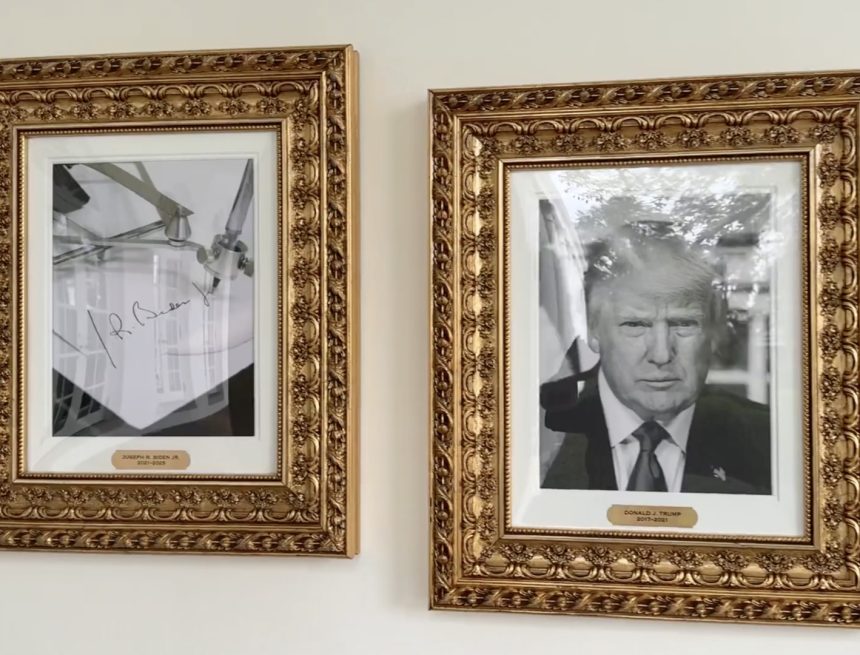
Trump puts photo of Biden autopen in White House ‘Walk of Fame’ | Donald Trump
[ad_1] NewsFeedPresident Donald Trump has installed a ‘Walk of Fame’…
North Korean troops flying drones into Ukraine to support Russian strikes: Kyiv
[ad_1] North Korean troops based in Russia’s Kursk have been…