There is something just so odd to me about the United States of America, which was built on immigration. All three of us at this table are here because we were an immigrant welcoming country. And this document says Europe is falling apart now because it is welcoming immigrants. Hi, I’m Robert Siegel. It’s been a couple of months since I got to hear what my two old friends have to say about politics, and a lot has happened since then. The longest government shutdown ever. The elections. The demolition of the East Wing of the White House. And hints that public support for Donald Trump, who led the Republicans to a sweep of both houses of Congress and the White House, might be weakening. Lots to talk about with New York Times columnist David Brooks. Good to be with you, Robert Good to see you again. And times Opinion contributor, writer E.J. Dionne. Great to be with you both, to be with you. And let’s start with an appraisal of where Donald Trump stands nearly a year into his second administration. David, why don’t you start us off. We are at the 532nd episode of Donald Trump is finished. And so I think a lot of people are seeing some things that are really bad for Donald Trump. His polls are down slightly. He lost. The Republicans have lost every major election in the last year. There was the Indiana representative standing up to him with impunity, hanging together. And to me, one of the most interesting facts is that percent of Trump voters think Donald Trump is responsible for the economy. And so E.J. is about to talk more about this. If he’s consistent with his column in the times the other day. But I’ll think I’ll contradict myself. But there are people who are flaking off, but is it something pivotal. Are we at a pivotal moment. I don’t think so. If you ask people a couple of months ago who was a better president, Donald Trump or Joe Biden, there was still a healthy majority that said Donald Trump. And finally, as Donald Trump is not a man to be inhibited by opposition or by rules. And so he is the president of my lifetime, I think, all our lifetimes who has exercised power more freely while ignoring restraints. And I think he’ll continue to do that. But flaking off is a measured statement. So decay but not fracture, not fracture. E.J., you have written about Donald Trump losing what you call the reasonable majority. Is there a reasonable majority. I think there is a reasonable majority in the country. One of the reasons I use that phrase is because a lot of people out there who voted for Trump were not part of the MAGA base, were not fooled in quotes by Donald Trump. There were people who were mad about the cost of living, in some cases angry about immigration, particularly what was happening at the southern border. They weren’t necessarily sold on Trump. And most of those people have taken a look at what has happened in the last year, and they have just moved away. They’ve said this is not what we voted for. He ignores the primary issue that pushed him their way, which is the cost of living, and a billionaire regularly mocking affordability. And by the way, surrounding himself with billionaires is not someone who’s going to appeal to that. They seem distracted by personal obsessions. You mentioned even the destruction of the East Wing of the White House and overreach, where even when they agreed with him on immigration, huge majorities dislike many aspects of what he’s doing. So I think people looked at this reason their way to opposition. And I think this is a little bigger than David’s analysis suggests. Some of the polls Gallup AP-NORC have him down at 36 percent and that up to a quarter of his own voters, if the high measures are right, have moved away from him. And the last couple of months feel like that Afghanistan moment for Joe Biden. If you remember Biden after the chaos in Afghanistan. Biden never recovered from the sharp drop in the polls he had then. Now David’s right. He could come back. And it’s certainly true that Trump is willing to exercise power in a way, in many cases, in the view of some of U.S. illegally, in a way no other president has been willing to. And so he’s going to keep doing that. But I think there’s pushback. And I just don’t think those Indiana Republicans are a one off. There are a lot of reasons to think there was something special about that. Speaking of the Republicans who would not do a redistricting that right, or refuse a majority of Senate Republicans in Indiana state senators rejected the midterm redistricting. And I just think something is happening. There’s a shift here, and we’ll find out in a few months. Which one of us is right about that. Can I just say one thing, actually, to pile on for E.J.‘s case to be for it, which is I think Donald Trump’s reaction to last months have been pretty terrible Yeah symptomatic of that is when he says, well, you should get by with two pencils. You don’t need $32, you only need $2. That is demonstrating a casual indifference to the economic pain people feel. And one thing people really detest is that. But the second point I’d like to make, this goes back to something we talked about in one of our earlier conversations about my pet peeve, about hating the way the word fight is used in politics. We need to fight. Fight to me, we need to scream louder and pump up our base. But politics is about persuasion, not fighting. And I think E.J.‘s numbers demonstrate that Trump voters all voters, are basically reasonable. And you can persuade them if you’re willing to meet them where they are – there have been presidents who, by virtue of personality or the way their political messages is framed. Phil fill people with optimism and excitement. I think of John F. Kennedy and Ronald Reagan as people who had that power. This optimism and excitement are not words I would use to describe the mood of the country right now. The more common word is anxiety. Yes no, I think that’s right. It’s interesting you say that. A friend of mine was talking to a C.E.O. he works with and the C.E.O. said, besides Trump, of course, giving himself on the economy. He doesn’t inspire people to feel that things are great, that things are good. He tends to have very angry, negative rhetoric that I think actually hurts. I think there’s enormous anxiety in the country and some of it, and David has written about this quite a lot. There’s a lot of loneliness, social isolation in the country. But I also think that there’s an economic component. David Wallace-Wells of The Times wrote a really excellent piece. I thought back in July about where did Mamdani come from. And it wasn’t about the proletariat. He talked about an emergent coalition of the precariat, which I think is going to be one of those words, along with affordability, a word of the year. And these are folks who yes, definitely working class people, but really extend higher up the income class. They’re mad about affordability. They’re enraged about inequality, corruption and what they see as the entitlement and impunity, as David put it, of the very wealthy. And I think there is just an unease. And lastly, there’s technology. Rahm Emanuel can be very quippy. The former mayor of Chicago. And he said, a lot of Americans are going to have to choose. Do they want their kids to be raised by parents or an algorithm. And I think that’s one of the kinds of anxieties, along with anxieties about employment, that technology is raising, to be fair. But Donald Trump built his career on American carnage, on darkness. He didn’t invent it. He played on what was already out there. There’s a thing called Google Ngrams, which measures all the words in usage in the English language across newspapers, magazines, and books. And you can go to databases stretching all the way back to the 1850s and discover what words were used. Most of the words used in the English language were positive words, words of positive emotion. We are an optimistic people and that stretched through the Civil War. It stretched through World wars. It stretched through the Great Depression. And now we are negative words are used much more often than positive words. So we’re in the most pessimistic, darkest cultural atmosphere in American history, at least stretching back to 1850. And so I will say, this level of disgust with the future, I think, is very alien to the American cultural DNA. And it’s important in history turns people reject the old what they get sick of the old show and they want a New show. So if you had run for president 2020 or 2024 or 2016. On Reaganesque optimism, you would get crushed. But maybe by 2028, 2020, 2032. I would not be surprised if this cycle has turned. Just a quick point. You mentioned the elections in the fall, and it struck me after the elections that when you looked at Abigail Spanberger in Virginia, the Democrat who got elected governor, if you look at Mikie Sherrill in New Jersey, who got elected and to a significant degree, Mamdani in New York, Zohran Mamdani, they all ran on anger at the status quo and prices. But they all conveyed a sense of empathy, solidarity, mutual respect. And I think if I were to guess the kind of Democrat who is going to win the nomination is someone who can play on two tracks at the same time to express certainly the anger Democrats feel about Trump and inequality and all those problems, but marry that to a sense of a hopeful future. And I think there’s still a big market for empathy and solidarity out there. I’d just like to note, before we move on to talking about the economy more broadly, the strange situation we’re in with respect to artificial intelligence. We’re waiting for this technology to mature and to be adapted. It’s the most ballyhooed technological change I can think of in my life, unless we go back to Atomic Energy in the 1950s. It’s going to change everything. We’re paying huge electricity Bills to because of it. And we’re also seeing the stock market being supported by it. And yet it’s not clear whether people are hopeful about this. Want us to be the nation that scores the best with artificial intelligence or whether they’re terrified of it Yeah well, I’ve interviewed dozens of A.I. experts and engineers, and some of them are doomers. They think it’s going to turn us into paperclips and destroy civilization. And some of them think it’s the greatest thing. We’re going to expand G.D.P. by 600,000 percent and productivity by. And their view has nothing to do with the evidence in front of them. Their view has entirely to do with the nature of their temperament, of their temperament. It’s their DNA. And so optimistic. People think it’s going to be great and pessimistic. I think people think it’s going to be terrible. I think it’s going to be like the railroads. It’s a very powerful technology which will produce a short term series of bubbles as everybody leaps into it. And then the long term, it’ll be O.K. I think we should ask A.I. what the future is going to be under A.I., and then maybe I will tell us. I think both views are there and I think both views are true. That’s the problem with talking about A.I. I think the wonder and the fear are twins in a way. They’re part of a sensible reaction to A.I. Well, moving on to the economy more broadly. Something you both alluded to. I mean, there’s an unusual political divide in the country right now, which is Democrats acknowledge an affordability crisis, and they have lots of schemes to deal with it to do away with Trump’s tariffs, to restore these subsidies for health care that your health insurance you buy on the exchanges. And the Republicans rather than having a competing agenda to cope with the crisis, President Trump says there is no crisis. It’s a hoax. It’s a Democratic job. Is he re-enacting Joe Biden’s mistake of telling people who are hurting, who are experiencing, in that case, inflation for the first time in their lives, most of them. It’s all in your head. Yes he’s doing exactly the same thing. You’re sitting there in the Oval Office. Your advisors are saying, look at the data, Mr. President. And the data is there. They’re not wrong. Median wages are at their highest point now than at any point in American history. Inflation is around 3 percent real wages are rising, which means people are getting things overall are getting more affordable. You look at the data, it looks pretty good, and then you look at what’s unaffordable. Most things are getting more affordable. What’s getting less affordable. The biggies are health and housing, and especially housing and blue areas. And so it’s hitting people in the housing piece of their lives, which is a major piece of their life. And so the thing I tell Donald Trump, if I had to talk to him, was something I heard from a C.E.O. and he said, I have customers coming to me with complaints. And then I go to my team and say, are these complaints valid. And the team says, no, not valid. We have the data. And the C.E.O. said to me, when that happens, I believe the anecdote and I don’t believe the data. And I think that’s right. I think because people are not fools about their own circumstance. I believe Newt Gingrich said of the question of the affordability crisis, if the public thinks there’s an affordability crisis, there is an affordability crisis. That’s the way you have to do it. The customer is never wrong. But I do think there are some real things. You mentioned the data centers driving up the cost of electricity. Mikie Sherrill in New Jersey ran on a promise to freeze electricity prices for a while, while they get a handle on it. That’s real. I think housing in, especially in the big metros, which tend to be blue, is a real problem. But child care, health care, and in some cases transportation, that is a real problem. The price of cars is a real problem. Higher education and higher ed has been. And so I think that while it’s true that we had high inflation for about a year and then it started to dissipate. But prices. Prices tend not to go down on a lot of things. And so these are real concerns. And they are things that I think are potentially responsive to policy and to political arguments. And you’re seeing as I say, Mikie Sherrill, talking about putting a freeze on, you’re talking about these fights over the data centers, which I think is going to be a really big issue in American politics. Spanberger is talking about using alternative energy, which can actually bring down prices. So I think we’re going to have actually a real debate over what might plausibly be done about affordability, because what’s interesting is that what you’re both saying is that the iconic costs of the last election, which were a dozen eggs and a gallon of gasoline, just aren’t what we’re talking about when we’re talking about an affordability crisis. We were discussing consumer prices is what we were discussing. And that was real inflation on things like eggs. But housing is like is a central thing. And one of the things that’s happened over the last generation or two is that people’s standards have changed. And so Matt Yglesias wrote a good Substack on this, which is the median income, as I said, is now about $88,000 a year. And if you take that median income and put it in the median city, that family of four, say, can afford to buy the home that families of four were content to buy in 1965. And so it might have one bathroom. And people are sharing bedrooms, but nobody wants to live that way anymore. And furthermore many fewer people are married. Many more people are living alone. And so that puts up demand on housing, especially in the big metros where people are more likely to be single. And so there’s been a creep in our expectations of how we’re going to live. And I think that has added to some of the unhappiness because people are not living up to their expectations. I think there’s a flip side to that as well, which is people aren’t getting married and aren’t having children because they are anxious about being able to afford them. And more than that, putting aside money. Bill Galston in the Wall Street Journal wrote a couple of weeks ago about this whole natalism argument. Our birth rates tend to go up when people are broadly optimistic about the future. And you. We certainly we baby boomers exist because of that optimism. And that is quite the opposite of what people are feeling now. And, Dave Winston, the Republican pollster, had a good piece. I think looking forward, you’re going to have to look at both the prices and whether wages are rising to meet them. And a lot of people sense that compared to the very rich, there’s a lot of sense of relative deprivation. Their wages still haven’t risen compared to what’s happened at the very top. And I think that’s on people’s minds. Well, let’s turn to foreign policy right now. And in particular, the remarkable document issued by the Trump administration, its national security strategy. I was struck most by what it said about Europe. Usually in the past when people said, I think Europe ought to be spending more on its own defense, it was in the context of their rich it’s no longer the post-war 1948. In Europe, these countries are thriving, especially Germany, and they can do more and pay for their own defense. This analysis more or less described Europe as so rotten as not being worth defending. It described as Europeans facing, quote, the stark prospect of civilizational and erasure which it attributes to immigration and the encroachment of the E.U. on national government. What’s going on here, David. I mean, this document could have called for reducing U.S. commitments to Europe or expecting the Europeans to do more without insulting them all as being a civilization in rotten decline Yeah the Trump people say they were attacking the E.U. and the ruling elites, but not the parties that are actually leading in the polls, which are the AfD and the French conservatives and Nigel Farage in the U.K. But I think what was interesting to me about the document is that it’s the foreign policy document, written as if culture matters more than realpolitik. And there’s a study that has haunted me for years. It’s done by the World Values Survey. And they survey people all around the world on their values. And it turns out most people around the world. And the key factor is are you an individualistic culture or are you a communal culture. And then they draw a helpful map to help you visualize the results. And on this map, most of the cultures of the world Confucianism, Africa, Southeast Asia, they’re all in a clump. And then there’s a little thing like Florida or Italy sticking out. And that thing sticking out is America and Western Europe. Our cultures are vastly more individualistic than cultures of any place else around the world. Our cultures are vastly less traditionalist than everywhere around the world. And along comes Trump. And they feel this. I’m not sure. They’ve seen the World Values Survey, and they think those modernists are destroying traditional values. And we’re going to be for traditional values, whether it’s Vladimir Putin or Xi Jinping and not those Commies in Stockholm. And so it’s a weird document in that it’s culture first, but it does point to a real problem, that there’s a culture gap between us and a lot of parts of the world. I think my friend David gives it a lot more credit when he says culture, because I read that thing very carefully. I agree, it’s a weird document and an interesting document. Business matters more than culture there. What was really striking going through it was how much this was about a fairly narrow view of business interests. Yes, some nice stuff about the working class here and there, but it was really about making deals. But the other thing that was so disconcerting is in the Cold War, the United States subrosa they didn’t really want it to be explicit supported parties of the center left and center right in Europe. We were on the side of democracy. This document explicitly is supporting parties of the far right in Europe. And yeah, some of that’s about culture. It’s an obsession with immigration and identity. It’s a deeply identitarian document. And there’s something just so odd to me about the United States of America, which was built on immigration. All three of us at this table are here because we were an immigrant welcoming country. And this document says Europe is falling apart now because it is welcoming immigrants. And of course, there are subtext here. It’s really about race. Europe is becoming less European. What exactly does that mean. That sounds like it’s about the immigration of Muslims to Europe. And it has something to do with race. But it’s a very disconcerting view compared to how we have thought. And I don’t mean we elites. I mean we Americans have thought of ourselves. We are talking today after some horrible shootings over the weekend, two students were killed and 9 injured at Brown University and overseas. At least 15 people were killed at Bondi beach in Sydney, Australia. As of now, the motive behind the Brown shooting is unclear. As of the time when we sat down to record this conversation, but in Australia there’s no lack of clarity. The point of the shooting was to kill Jews. I’m curious, since this is in keeping with a trend which is a trend of rising anti-Semitism and rising anti-Semitic violence in the world. What you make of it. I mean, what you however you react to it I mean, first one part of it is not a trend, these two shootings. It is not true that mass shootings are rising. So in 2025, we at least with a few weeks left have the lowest number of mass shootings in 20 years, so that’s a good sign. I’m not sure how we explain that, but maybe just random distribution. But what is a trend, as you say, is rising anti-semitism? And I think that’s been true in all our lives or Jews. It’s been true in direct experience. And I think the troubling thing, there’s a piece in The Atlantic by Yair Rosenberg saying, quoting a guy named Tim Miller who says, the more I’m around young people, the more terrified I get. And there’s a fair bit of evidence that we used to think bigotry is on. Old people are bigoted. But now there’s more bigotry among young people. 25 percent of young adults say they have an unfavorable opinion of Jewish people. Percent say that Jews have too much power. And if this is not about Israel, they’re not saying Israelis have too much power. And so they’re saying Jews have too much power. So somehow they’re in online spaces. And my son tells me about this all the time that are just rabidly anti-Semitic. And it becomes a norm and that’s become a norm. And I think as just about the Bondi beach shooting, I think a lot of people and this is controversial have said, well, you use the phrase globalize the Intifada. That’s what it looks like. And I have to say, I agree with that. Some words take on historical baggage. If you use the word states’ rights, and when you’re running for office in the South that has historical baggage, when people say they don’t believe the Holocaust happened, it’s not they didn’t believe Big bonfires didn’t happen. They mean genocide. And to me, the word Intifada has taken on the baggage. And I was there the Second Intifada in Israel covering it. Baggage of using terrorism to advance the Palestinian cause. And so I think that phrase is people should be careful about that phrase. E.J. any thoughts. Well, I think that the vast majority of people out there who are critical of Israeli policy after October 7, who hated October 7, it was an evil act, but really, intensely opposed how long the war lasted and the damage it did in Gaza. Most of the people opposed to that policy are not anti-semites. And I think it’s very important to make that clear. And I know you’re not saying that, but I think it’s important to say that at the outset, I got to say I was just very, very upset by this. And I was struck by a beautiful piece that Rabbi Sharon Bruce wrote in the times. It went up just shortly before we started talking. And it is particularly horrible that this happens on Hanukkah, which, as she writes, is the miracle of the persistence of light in dark times. And she does lift up a fruit vendor named Ahmed el Ahmed, who risked his own life to tackle one of the gunmen and probably save lives on that beach. But, and was shot, I might add. Yes, and was shot. He survived, but he took an enormous risk. Bigotry and hatred are the enemies of every free society, and anti-Semitism is one of the oldest and most destructive forms. I think there is evidence of rising anti-Semitism, and I think that it needs to be fought. And I think the more we can disentangle it from the politics of the Middle East and just face up to the fact that this is a form of bigotry, the better off will be here. Here we have made a practice in these conversations of concluding on a note of joy, literally three notes of joy, one from each of us. What’s brought some joy into life since last we met. David, you go first. I hope I haven’t talked about the New York Mets in these joy conversations. Probably not, because they don’t really bring joy, but well, there’s joy. Sports teams are doing really well, but I won’t bring them up. There’s joy in being between seasons. Well, they’re dismantling their team and all the players I love are being traded and let go. And the entire fan base is having conniptions, but I find it kind of amusing. And so I’m always thinking, well, they’ll figure this one out. So I’m enjoying joy in the tumult and the tumult. E.J. so two things, if I may. Real quick one this season I am a sucker for the season we’re in. Christmas tree, menorahs, nutcracker statues, music from Galway to Sinatra to Taylor Swift. I’m a sucker for it all. But one thing that’s brought me great joy the last couple of weeks that I want to shout out, I am a mystery addict. I was one of those kids who loved the Hardy Boys, and I still remember my friend Dave Levesque and I learnedly discussing whether “Footprints Under the Window” was better than “The Secret of the Old Mill.” So I continue to read these series Michael Connelly’s New Lincoln Lawyer novel. The proving ground is a wonderful addition to this, and it’s about I and another group of writers I admire when they can pull it off are continuators. Some series are so popular that other writers pick them up. The writer Mike Lupica has picked up Robert B. Parker’s Spencer stories as a Boston lover. I love Spencer, his “Showdown” and all the several others he’s done are really great, and I think they have brought joy to my life. So season’s greetings to both of them. And I have two experiences of theater about New York City to relate, which brought me joy. Very different. One was Adam Gopnik’s one man show. He’s the New Yorker staff writer and essayist, and he gave a performance of his one man show about life in New York with great emphasis on his misadventures in psychoanalysis, which was both hilarious and very wise. And then the Shakespeare theater in Washington, which defines Shakespearean drama very broadly, has a revival of “Guys and Dolls” on right now, which I found delightful, and it sent me back to reading more Damon Runyon stories. And it reminded me that here were two people Damon Runyon, who wrote about gamblers and gangsters around times Square, always in the present tense, never use the past tense. And Adam Gopnik. There are two out-of-town guys who came to New York and fell in love with the place. Adam from Montreal and Damon Runyon some decades back was born in Manhattan, Kansas. So on that note, I hope you lift up the quality and level of every conversation. Robert, that was great. Well, it’s been great seeing you guys once again and hope to see you again in a couple of months and see you. See you soon.
Related Posts
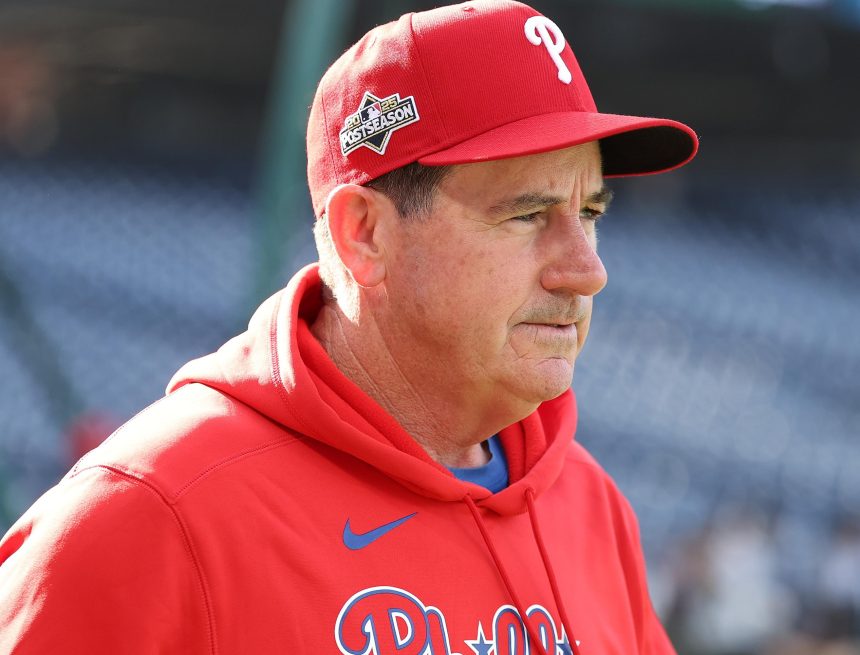
Phillies’ Rob Thomson Explains 9th-Inning Decisions in Loss to Dodgers amid Criticism
The Philadelphia Phillies' dramatic ninth-inning rally in Monday's 4-3 loss…

Russia-Ukraine war: List of key events, day 1,375 | Russia-Ukraine war News
[ad_1] Here are the key events from day 1,375 of…
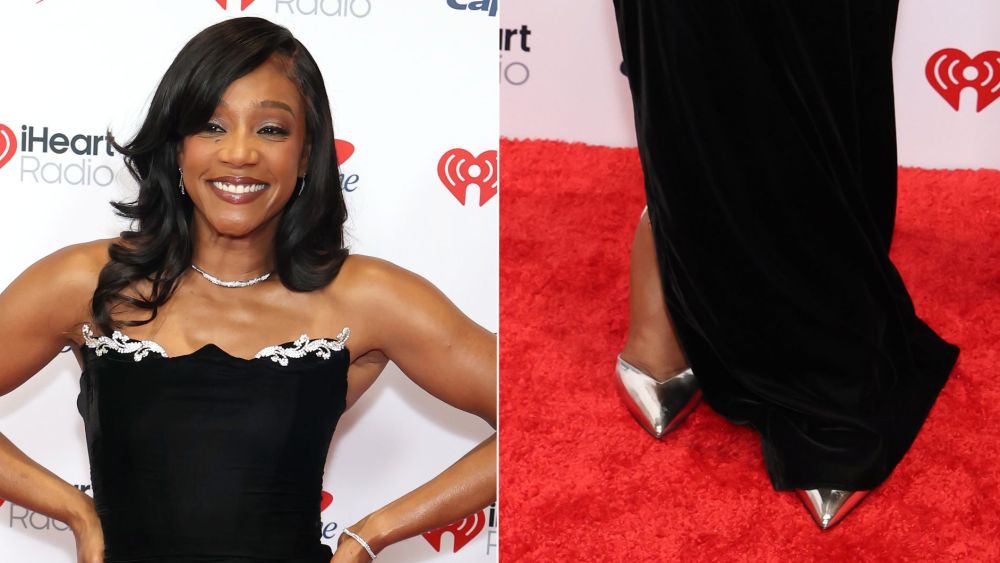
Tiffany Haddish Backs the Metallic Pointed Pump Trend in L.A.
Tiffany Haddish gave the metallic pointed-toe pump trend a holiday-luxe…