It’s the holiday season, and in the holiday season here at New York Times Opinion, Nick Kristof many years ago kicked off a tradition which I love, it’s one of my favorite parts about being here, where different columnists and parts of the organization offer up their recommendations for giving, trying to make people aware of charities, philanthropies they might want to support, where money that they can spare might do a tremendous amount of good. In my personal giving, every year I give some of the money I’m giving to a local charity, but then I give a lot of it to GiveWell. Of every organization I know of, I have the most trust in them to vet, to run the experiments, to read the research, to really figure out where my money will go the furthest in helping other people. GiveWell has not been around that long, but in the time they’ve been around, they’ve become a pretty big channeler of givers’ funds for this exact reason, because a lot of people trust the work they do, because it is so transparent, because it is so rigorous. Billions of dollars have ended up being given through them. And so I am recommending that if you have money to spare, you consider giving some of it through GiveWell, which you can do at GiveWell.org. But I thought as a way to talk about this, rather than writing a column, I would have Elie Hassenfeld, GiveWell’s C.E.O. and one of its founders, on the show, to talk about how GiveWell started, how it does its work, how it makes some of its very arguable and very difficult decisions in terms of what to recommend and what not to recommend, and how givers themselves should think about donating money, to whom, to where and under what conditions. As we all wrestle with how we can do a little bit more good in a world that needs a lot more good done. I think a lot of the focus that people bring to charity is on the donor. It’s saying to donor: You should be generous. And then, when you’re generous, that’s success. And of course, what that misses is that the person who you should ultimately be focused on is helping someone in need. That’s the goal. I think that what really is important to remember is both the fact that you can fail to help the person in need, and that happens all the time, but also that charitable giving isn’t just a nice thing that a donor can do. It’s a very practical way to make the world a better place, that you can give and save lives. And this has been — it’s clear and demonstrable that supporting public health programs has this kind of impact.
Related Posts
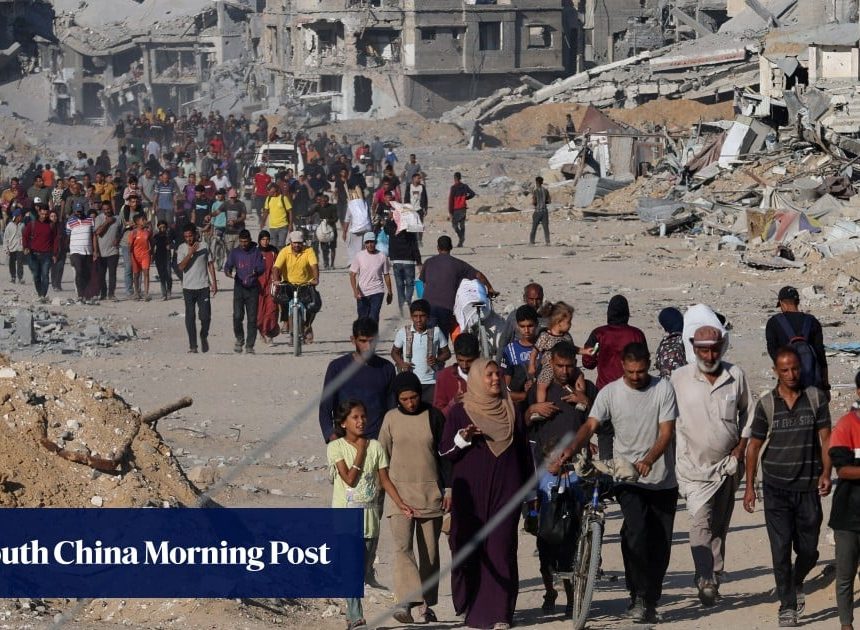
Global agencies hope for Israel-Hamas truce to hold, prepare to send aid to Gaza
[ad_1] International agencies were preparing on Saturday to pour aid…

Best-Ever Green Bean Casserole With Step-by-Step Video Recipe
Few Thanksgiving side dishes keep the masses as happy as…

Sabrina Carpenter Swaps Short N’ Sweet Tour Fits for an All-American Classic
Photo: Shoot Digital for Style.comThe likes of Tate McRae, Addison…