The timing is brutal. Just as the world celebrates the 10th anniversary of the adoption of the Paris climate agreement this month, new evidence shows that the world is crashing through the main defence that was constructed against climate catastrophe.
The three-year temperature average is – for the first time – set to exceed the Paris guardrail of 1.5C above preindustrial levels. According to the Copernicus Climate Change Service, 2025 will join 2023 and 2024 as the three warmest since the Industrial Revolution, reflecting the accelerating pace of the climate crisis.
As temperatures continue to rise – including in the oceans, where the extra heat fuels more powerful hurricanes – far greater catastrophes lie ahead as feedback loops push the planet past irreversible tipping points.
We have already passed our first tipping point, the progressive loss of warm-water coral reefs, on which nearly a billion people and a quarter of marine life depend; a development particularly relevant to island countries like Barbados. We are on the brink of several more, including the death of the Amazon rainforest, the collapse of key ocean currents, and the loss of ice sheets leading to metres of sea level rise.
Cutting methane emissions is the fastest and simplest way to slow near-term warming and prevent triggering more tipping points. We must also reduce carbon-dioxide emissions as quickly as possible, although much of the impact on climate will take effect in the medium to long term. In contrast, we could avoid up to nearly 0.3C of warming by the 2040s by eliminating the easily avoidable methane emissions, starting with those of the oil and gas sector. Combined with a tripling of renewables and doubling of energy efficiency, this could cut the rate of warming by a third in 10 years and halve it by 2040, keeping the 1.5C goal in sight.
The European Commission helped launch the global methane pledge at Glasgow’s Cop26 in 2021, where today it and 159 other countries are supporting emission cuts of 30% by 2030 from 2020 levels. However, this is voluntary, and the UN has reported that current measures, even if fully implemented, would only reduce emissions by 8% by 2030 from 2020 levels. The urgency of the climate demands mandatory measures.
It is time for a binding agreement for methane, starting in the oil and gas sector. Other leaders have joined this call, including Wesley Simina, president of the Federated States of Micronesia, and Feleti Teo, prime minister of Tuvalu. The French president, Emmanuel Macron, also voiced support for a binding framework and called for a global alliance dedicated to action on methane.
Despite many past promises and pledges, methane emissions from the energy sector continue to grow, making a binding agreement essential. Many of the pieces for an agreement are moving into place. Companies representing nearly 40% of global oil and gas production promised at Cop28 in 2023 to ban routine gas flaring by 2030 and limit leaks to “near zero” by 2030. They include 34 national oil companies, suggesting that their governments should be ready to join an agreement that ensures their promises are honoured. The binding EU methane regulation bans flaring – and soon will ban leaks – and requires robust measuring, monitoring, reporting and verification, both for domestic fossil fuel production and for imports.
The Brazilian president, Lula Inácio Lula da Silva, and leaders of more than 80 other countries will be developing a roadmap to phase out fossil fuels, which should have as a first step eliminating methane waste through a binding agreement among willing nations.
The Montreal protocol, signed in 1987, can provide the inspiration. Besides putting the protective ozone layer on the road to recovery, that binding agreement has done more than any other to combat the climate crisis, mainly because the ozone-depleting chemicals it reduces are also powerful warmers. The protocol is on course to avoid 2.5C of warming by the end of the century, a massive contribution. It was negotiated by a small coalition of willing countries, and concluded in less than a year after formal diplomatic negotiations opened.
The next step is to convene heads of state of willing nations to develop a roadmap in 2026 for binding measures for the oil and gas industry. An ambitious but challenging timeline would be to start negotiations among this coalition of the willing in early 2027, and adopt an agreement as soon as possible thereafter. As shown by the Montreal protocol, transformative change can begin with just a handful of pioneering nations, before spreading worldwide.
A legally binding methane agreement for the oil and gas sector can prevent energy waste, while buying time over the next 15 to 20 years to build resilience as research to scale up decarbonising technologies to commercial level builds pace. This will give countries in the south with oil and gas assets the opportunity to use the one thing that can finance their way to net zero.
Preventing methane energy waste makes sense for industry, and it makes sense for people and the planet. As Aristotle taught us, waste is a form of injustice. Preventing it is not too much to ask.
Related Posts

Four-inch worm hatches in woman’s forehead, wriggles to her eyelid
Creeping For anyone enjoying—or at least trying to enjoy—Thanksgiving in…
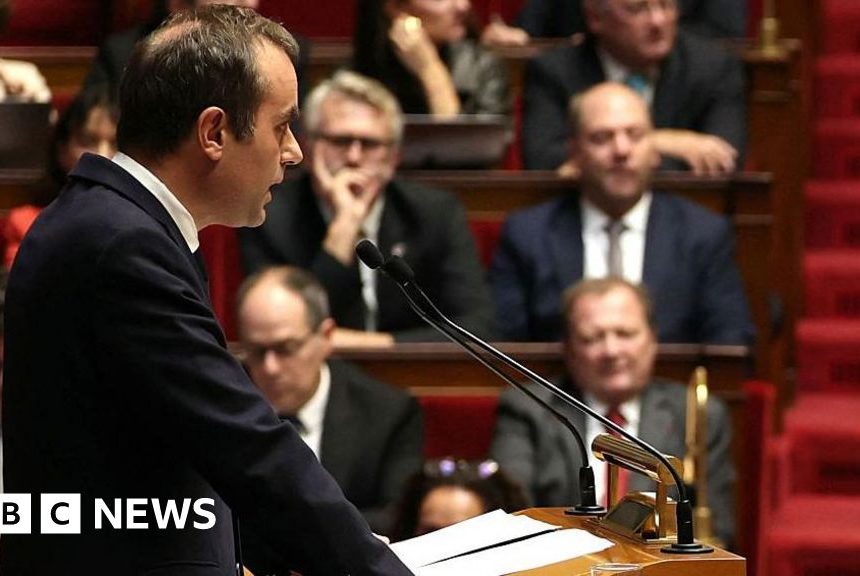
French PM backs freezing Macron’s pension reform to save government
[ad_1] French Prime Minister Sébastien Lecornu has told parliament he…

Is Better Balance the Key to a Happier, Healthier Life?
On a rainy Saturday last summer, I can be found…